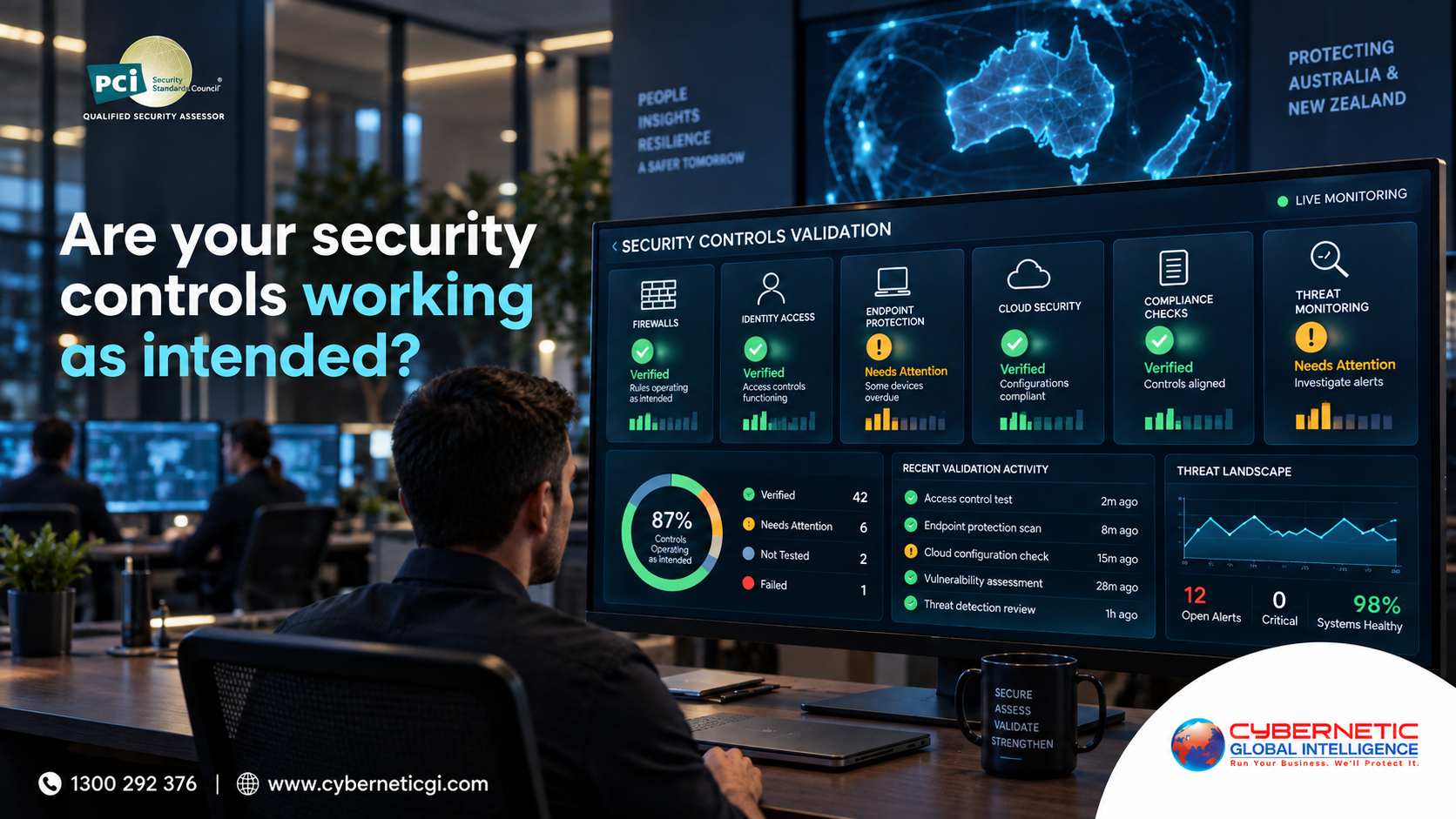
Executive confidence is often built on policies, frameworks, and reporting dashboards. A board approves an information security strategy. Leadership reviews risk indicators. Security committees receive regular updates. However, documented controls do not always reflect operational reality.
Security policies must operate within complex business environments. Legacy technology, evolving threats, operational pressures, and changing access requirements can create gaps between what an organisation intends to achieve and what is technically implemented.
A mature governance approach requires more than having policies in place. It requires evidence that security controls are consistently applied, monitored, and improved.
Across Australia and New Zealand, organisations are increasingly expected to demonstrate measurable cyber resilience through frameworks such as ISO 27001 and the Australian Cyber Security Centre (ACSC) Essential Eight.
When Documented Controls Do Not Match Reality
When reviewing governance structures, missing documentation is rarely the only concern. The more significant risks often exist where documented procedures and operational practices become disconnected. Consider a standard vulnerability assessment process.
An organisation may maintain a policy requiring critical vulnerabilities to be addressed within defined timeframes. Internal teams may report that the control is operating effectively.
However, a technical review may identify exceptions, outdated systems, or operational constraints preventing those requirements from being consistently achieved.
The policy exists. The intended control exists. But the operational evidence may tell a different story.
Effective governance depends on closing this gap through continuous validation, technical assessment, and objective evidence.
Why Independent Evidence Strengthens Governance
Security teams play a critical role in protecting organisations. However, effective oversight requires independent validation of whether controls are operating as expected.
A governance model built on evidence provides decision-makers with greater confidence.
For example, an organisation should not rely solely on confirmation that network boundaries are secure. It should validate supporting evidence such as firewall rule reviews, configuration records, monitoring data, and access control assessments.
The quality of evidence determines the strength of security assurance.
A manually maintained spreadsheet may provide limited confidence. Verified system records, technical logs, and outputs from a secure configuration review provide stronger assurance of control effectiveness.
The Assessor’s Approach: Evidence Over Assumptions
Cybersecurity assessments are not simply exercises in reviewing policies. They involve understanding whether security practices operate effectively within real-world environments.
During an assessment, experienced cyber security auditors examine whether security controls are supported by reliable evidence.
A quarterly user access review, for example, should not only confirm that approvals were completed. It should also consider whether access aligns with current roles, employment status, business requirements, and security policies.
Similarly, change management processes should demonstrate that emergency changes are appropriately reviewed, tested, and documented. This approach shifts cybersecurity governance from assumption-based reporting to evidence-based assurance.
Building Defensible Cybersecurity Governance
Organisations preparing for ISO 27001 certification, Essential Eight assessments, or broader security assurance activities need confidence that their controls can withstand detailed review. Independent assessments help identify where governance processes can be strengthened.
Experienced ISO 27001 information security auditors evaluate whether security practices align with organisational objectives, industry expectations, and recognised frameworks.
The objective is not simply achieving compliance. It is helping organisations understand their actual security posture and make informed decisions about risk management.
How Cybernetic GI Helps Organisations Move From Assurance to Action
Cybersecurity governance requires more than identifying gaps. Organisations need clear, practical guidance to understand where risks exist and what actions will strengthen their security posture.
At Cybernetic GI, assessments are delivered by experienced cybersecurity professionals who work directly with organisations to evaluate controls, validate evidence, and identify opportunities for improvement.
Our approach combines technical assessment with governance insight, helping security leaders and executives understand not only whether controls exist, but whether they are operating effectively in practice.
Whether preparing for certification, strengthening regulatory readiness, or improving overall cyber resilience, organisations benefit from working with specialists who understand both the technical environment and the governance expectations behind it.
The outcome is a clearer understanding of risk, stronger evidence-based decision-making, and a practical roadmap for improving cybersecurity maturity.
From Security Policies to Operational Assurance
Strong cybersecurity governance is built when policies, technical controls, and operational practices work together. Boards and executive teams need confidence that security decisions are based on evidence rather than assumptions.
A mature security environment is one where organisations can clearly demonstrate:
• Which controls exist
• How effectively they operate
• Where improvements are required
• How risks are being managed
Cybersecurity maturity is not measured by the number of policies an organisation has created. It is measured by the organisation’s ability to prove that those controls work.