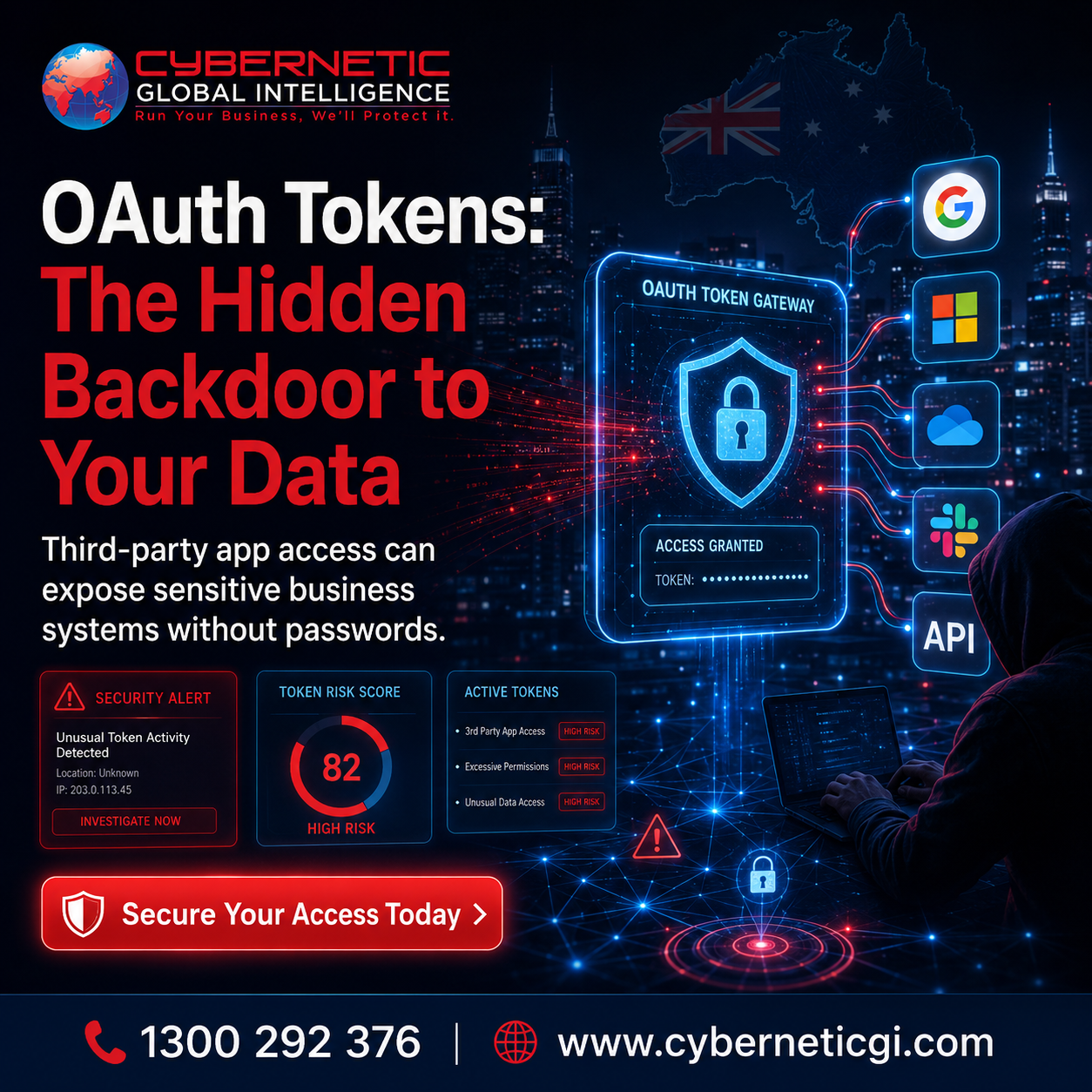
You lock your front door. Setting the office alarm comes next. Then you check the security cameras. Finally, you assume your corporate data is safe.
Here is the catch. What if a trusted partner leaves a side window wide open?
This is the reality of modern corporate networks. Businesses today use hundreds of cloud applications. Employees want to work faster. They connect new productivity tools with a single click.
Team members link calendars to video platforms. Marketing teams connect software directly to customer databases. Ultimately, they use OAuth tokens to grant these permissions.
What exactly is an OAuth token? Think of it like a hotel key card. You show your passport at the front desk once. The receptionist verifies your identity and gives you a piece of plastic. From that moment on, you just tap the card to open doors. You never show your passport again.
OAuth tokens work the same way for software. They bypass the need to enter passwords repeatedly. They keep your business integrations running smoothly in the background.
But it can create a security situation. These same tokens create a permanent access path into your cloud.
If a criminal steals an OAuth token, your security perimeter collapses. They walk straight into your network. Password entry is completely bypassed. Malicious actions will not trigger your multi-factor authentication (MFA) prompts. Consequently, they are already trusted by your system.
Many businesses ignore this threat completely. It is a massive, unmanaged blind spot for security teams across Australia.
Inside the Drift Breach: A Supply Chain Nightmare
Let us look at a real-world disaster. A massive supply chain cyberattack recently shook the global technology sector.
A highly capable threat actor launched a targeted campaign against corporate Salesforce environments. Intelligence teams track this group as UNC6395. The entry point was Drift. Drift is a popular sales engagement and AI chatbot platform owned by Salesloft.
How did the attackers get inside? They did not crack complex passwords. Instead, the hackers targeted Salesloft’s development environment months earlier. Accessing private software repositories gave them the foothold they needed. Eventually, they pivoted directly to Drift’s cloud infrastructure.
From there, they stole valid OAuth refresh tokens. These tokens belonged to Drift’s enterprise customers.
The attackers used these stolen tokens to access corporate Salesforce data directly. They ran automated queries. Vast amounts of user lists, account information, and billing records were stolen in minutes.
Over 700 organisations suffered immediate data exposure.
Learn why companies should adopt zero trust & identity first security models.
Why Passwords and MFA Can’t Save You
Most corporate security strategies focus heavily on user logins. You enforce strict password rotation. Mandatory biometric MFA is common practice. Additionally, you monitor unusual login locations.
These controls block standard credential theft. But they are completely useless against stolen refresh tokens.
An OAuth token has two parts: an access token and a refresh token. The access token is short-lived. It expires in an hour or two. But the refresh token lasts for months or even indefinitely. When the access token expires, the refresh token asks the system for a new one automatically.
Once an employee approves an external application, your identity platform issues these tokens. This token tells your cloud environment that the application has ongoing permission to act.
When an employee leaves your company, you disable their active directory account. When a security policy dictates, you force a password reset.
The OAuth token often stays alive.
It survives password resets. The token operates entirely outside the view of traditional monitoring tools.
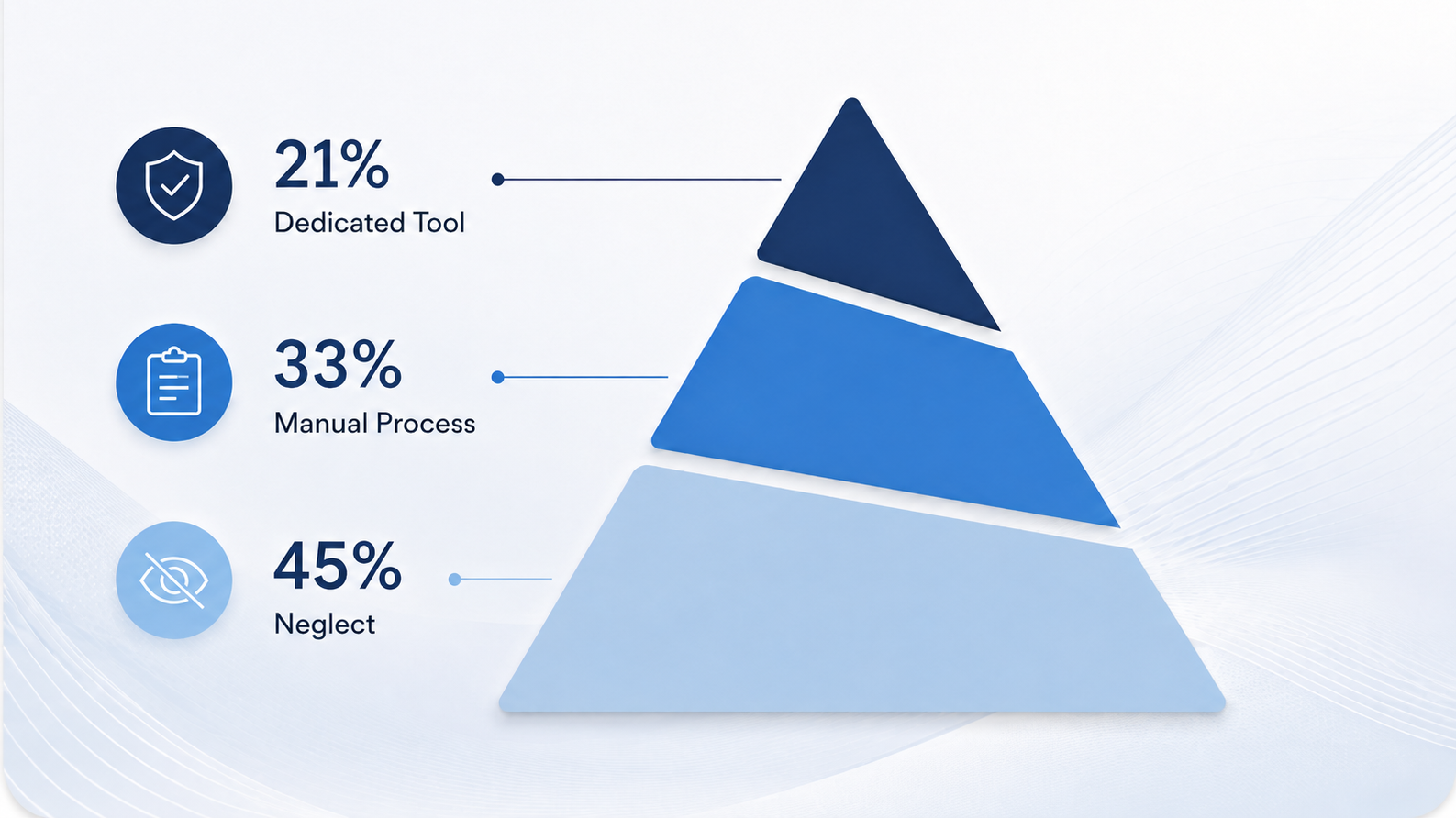
A recent industry survey revealed a shocking truth. 45% of organisations do nothing to monitor OAuth grants at scale. Another 33% rely on manual spreadsheets.
Manual tracking does not scale in a modern cloud ecosystem. It leaves your business dangerously exposed.
Building a Multi-Layered Defence Framework
How do you protect your sensitive corporate data from a persistent back door? You must shift your defensive focus.
You must monitor active integrations, not just user logins. You need to know exactly what software runs inside your digital environment. This requires a multi-layered security framework.
First, look at your overall configurations. A regular cyber security audit reveals exactly who has access to your systems. It uncovers dormant third-party applications that your team forgot about months ago.
Running a thorough assessment helps you build an accurate inventory of every connected application. You cannot secure what you do not know exists. A comprehensive cyber security audit establishes strict authorisation workflows and clear accountability across your entire organisation.
Second, inspect the applications you build or customise internally. To stop token exposure at the structural level, companies need a secure source code review.
A professional development evaluation catches dangerous habits like hardcoded API keys early in the software lifecycle. It ensures your application manages digital secrets safely. A thorough, secure source code review eliminates structural vulnerabilities before the binaries ever reach a live production environment.
Third, test the communication pipelines between your enterprise platforms. Because SaaS integrations rely heavily on backend connections, API penetration testing is vital.
Conducting a rigorous simulation allows you to analyse a token abuse scenario safely. It shows you exactly how an attacker could move laterally through your cloud tools. Our specialists use API penetration testing to find flaws in how your backend systems validate incoming tokens.
Finally, scan for known vulnerabilities across all corporate infrastructure. Pairing your identity checks with a continuous system scan keeps your defensive posture strong.
A standard vulnerability assessment highlights missing patches, misconfigured servers, and outdated software. It acts as an essential early warning system. A routine vulnerability assessment scans your network for structural weaknesses, ensuring your endpoints remain hardened against external exploitation.
Aligning with Australian Cybersecurity Standards
Australian businesses face unique regulatory compliance pressures. You must adhere to the Privacy Act and APRA CPS 234. The Australian Cyber Security Centre (ACSC) updates the Essential Eight mitigation strategies frequently to address these sophisticated threats. Failing to implement adequate visibility can result in severe financial penalties and long-term reputational damage.
Think about your compliance obligations under the Notifiable Data Breaches (NDB) scheme. If an attacker steals data via a third-party token, your firm is still fully responsible. The federal government will fine your business, not the external software vendor.
This is why a periodic cyber security audit must include SaaS integration tracking. Your team must prove to regulators that you monitor every single digital gateway continuously.
Your development practices must also evolve to meet strict security baselines. If your internal IT team writes custom scripts to connect your databases, implementing a secure source code review becomes a mandatory protection step. This technical review ensures your developers use secure token storage mechanisms rather than leaving raw refresh tokens in plain-text configuration files.
Furthermore, hackers love to target weak endpoints where software talks to software. Your corporate data flows through these interfaces constantly. Routine API penetration testing checks if your system mistakenly accepts expired, manipulated, or unverified tokens from external sources.
Do not view security scanning as a one-time check. New zero-day exploits emerge daily in the wild. A continuous vulnerability assessment ensures that your local systems do not contain weaknesses that allow hackers to steal tokens directly from user devices.
Find out how to secure cloud containers and APIs in a remote, first hybrid world.
Partnering with Cybernetic Global Intelligence
Securing a modern, cloud-heavy business is a complex challenge. You do not have to navigate it alone.
At Cybernetic Global Intelligence, we help organisations across Australia secure their digital footprint. We provide a comprehensive suite of security services tailored to your specific industry requirements.
Our certified professionals can perform a rigorous cyber security audit to uncover hidden access grants and provide clear visibility into your cloud environment.
If you develop internal software, our engineers conduct a comprehensive secure source code review to lock down your programming logic.
We protect your data transmission paths with expert API penetration testing, hunting for complex logic flaws that automated tools miss entirely.
Finally, we keep your defences updated through our advanced vulnerability assessment services, identifying technical gaps before criminals can exploit them.
Contact Cybernetic Global Intelligence today. Secure your organisation against modern identity threats before it is too late.