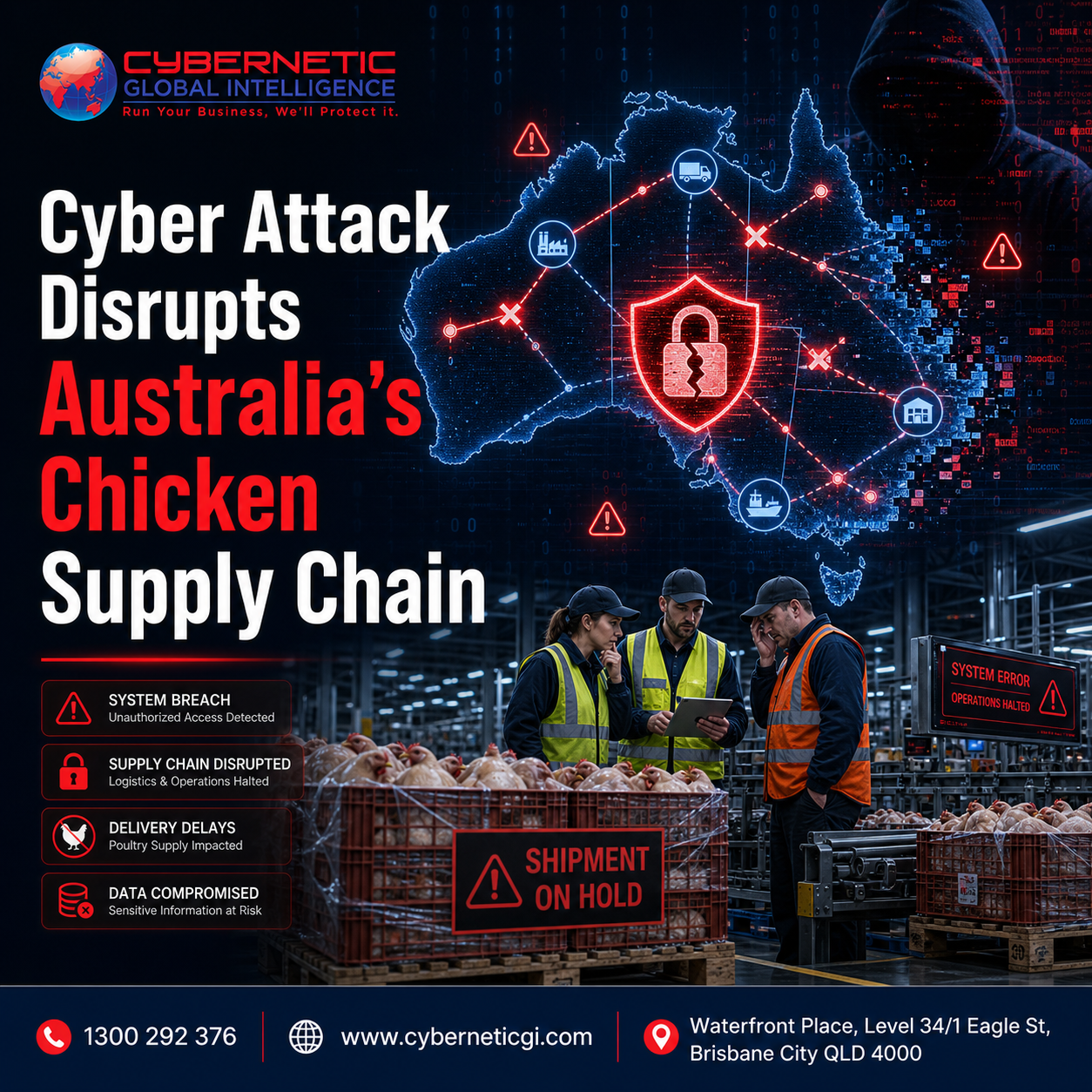
Cyber attacks are no longer limited to banks, technology companies, or government agencies. Today, they reach deep into everyday industries such as food production, logistics, and agriculture. When these systems fail, the impact spreads quickly across the supply chain.
A recent incident involving Hazeldenes shows how a single cyber event can halt operations and affect businesses across an entire region.
The poultry processor in regional Victoria experienced a cyber attack that forced parts of its system offline. Production stalled. Deliveries stopped. Butchers, pubs, and wholesalers suddenly found themselves without chicken supplies.
This event highlights a simple truth: operational technology and digital systems now sit at the centre of modern business. If cybersecurity fails, operations stop.
For Australian organisations, incidents like this underline the need for stronger monitoring, regular testing, and professional oversight, such as a structured cybersecurity audit.
What Happened at Hazeldenes
Hazeldenes operates one of the major chicken processing facilities in central Victoria. The company supplies poultry products to retailers, wholesalers, and hospitality businesses across the state.
According to reports, the incident forced the company to shut down its on-site Wi-Fi network while investigators assessed the situation. Without access to critical systems, the company struggled to package and distribute its products.
The company confirmed it was working with cybersecurity investigators and authorities to determine what happened and to restore operations.
Staff reportedly noticed system issues earlier in the week. Employees experienced difficulties logging in and accessing internal systems. By Thursday, the situation had worsened enough that the company disabled its network to contain the problem.
While investigations continue, the disruption quickly moved beyond the facility itself.
Explore what happens when cyber incidents disrupt patient care.
Immediate Impact on Businesses
Food supply chains operate on tight schedules. Products move quickly from processing plants to distributors and then to retailers.
When a major processor stops operating, the effect is immediate.
Businesses that depend on Hazeldenes suddenly faced cancelled deliveries. Some wholesalers learned only hours before expected shipments that their orders would not arrive.
One Melbourne-based wholesaler had to search for alternative suppliers to avoid losing customers. Without replacement stock, their clients would simply look elsewhere.
Small businesses were hit even harder.
In the regional town of Ouyen, a local butcher reported that his main weekly delivery never arrived. The shipment usually supplies much of the town’s chicken products, including stock for local pubs and shops.
Without that delivery, shelves quickly emptied.
The pub ran out of chicken. The supermarket saw shortages. Even the local bakery faced supply problems.
A single cyber attack had triggered a ripple effect through an entire regional supply network.
Why Operational Systems Are Vulnerable
Food processing facilities rely heavily on digital systems to keep operations running smoothly. These systems control:
• production scheduling
• packaging and labelling
• inventory tracking
• logistics coordination
• supplier and customer orders
Many of these processes are automated. If internal networks or control systems go offline, staff may lose the ability to track inventory or manage shipments.
Even if the factory equipment continues running, the business cannot operate efficiently without its digital systems.
This is why cybersecurity for operational environments has become critical. Regular cybersecurity audit processes help identify weaknesses before attackers exploit them. They assess system access controls, network segmentation, patch management, and monitoring systems.
Without this type of oversight, businesses often discover vulnerabilities only after an attack occurs.
The Role of Ethical Hacking in Prevention
Many organisations assume cyber security tools alone will protect their systems. Firewalls and antivirus software are important, but they are only part of the defence.
Proactive testing is equally important.
This is where ethical hacking plays a role. Ethical hackers simulate real-world attack techniques in controlled environments. Their goal is to find weaknesses before criminals do.
Through structured ethical hacking exercises, organisations can identify gaps in network defences, exposed systems, and risky configurations.
For industries such as food production, these assessments can reveal issues within both corporate IT systems and operational technology networks.
Combined with a formal cybersecurity audit, ethical hacking provides a realistic picture of how well an organisation could withstand a real attack.
Supply Chain Risks Are Increasing
The Hazeldenes incident highlights a broader issue facing modern supply chains.
Manufacturers and distributors now operate within highly connected digital environments. Vendors, logistics providers, and customers often access shared platforms or data systems.
If one organisation experiences a cyber breach, partners can feel the impact almost immediately.
Attackers understand this.
Supply chain companies are increasingly targeted because they provide access to multiple organisations at once. A successful breach in one company can open doors to many others.
This is why Australian cybersecurity frameworks emphasise strong baseline protections. One of the most widely recommended frameworks is the Essential Eight.
Why the Essential Eight Matters
The Essential Eight is a set of security strategies developed by the Australian Cyber Security Centre, which operates under the Australian Signals Directorate.
These controls help organisations reduce the likelihood of cyber incidents. They include practices such as:
• application control
• patch management
• restricted administrative privileges
• multi-factor authentication
• regular backups
However, implementing these measures correctly requires technical expertise.
Professional Essential Eight security auditors evaluate whether an organisation truly meets these security standards. They examine systems, policies, and operational practices to verify compliance.
Working with experienced Essential Eight security auditors also helps businesses prioritise improvements that reduce the most risk.
For companies managing large supply chains or manufacturing facilities, this type of assessment is essential.
Communication Matters During Cyber Incidents
Another issue highlighted in the Hazeldenes situation was communication.
Several affected businesses reported that they received little information about the disruption. Some only discovered the problem when deliveries failed to arrive.
During cyber incidents, clear communication is critical.
Suppliers, partners, and customers need timely updates so they can adjust operations. Without information, businesses are forced to make last-minute decisions that affect their own customers.
Incident response planning should always include communication protocols.
A well-prepared cyber incident response team ensures that technical investigation, operational recovery, and stakeholder communication happen at the same time.
Understand how to manage third-party cybersecurity risk in the public sector.
What Businesses Should Learn From This Event
The Hazeldenes disruption offers important lessons for Australian organisations.
First, cyber attacks can affect any industry. Food production, agriculture, logistics, and manufacturing are all potential targets.
Second, operational downtime can spread far beyond the affected company. Entire supply chains can feel the consequences.
Third, preparation is essential.
Organisations should conduct regular cybersecurity audit programs to identify vulnerabilities early. Structured ethical hacking assessments help simulate real threats and reveal gaps in defence.
Conduct Tabletop exercises to test your organisation’s ability to respond to real-world threats such as ransomware attacks, data breaches, and critical system disruptions. Explore our case study to understand more on the topic.
Finally, engaging experienced Essential Eight security auditors ensures that organisations meet recognised Australian security standards.
These steps reduce the likelihood of operational shutdowns and protect both business continuity and customer trust.
Strengthening Cyber Resilience
Incidents like the Hazeldenes attack serve as reminders that cybersecurity is now part of operational risk management.
Companies that rely on digital systems must treat cyber resilience with the same seriousness as workplace safety or equipment maintenance.
This includes:
• continuous monitoring
• independent security assessments
• tested incident response plans
• strong governance around access and system updates
Organisations such as Cybernetic Global Intelligence support businesses in building these protections through services such as ethical hacking, structured cybersecurity audit programs, and assessments conducted by certified Essential Eight security auditors.
With the right preparation, companies can detect threats earlier, limit disruption, and keep critical operations running – even when attackers try to interfere.
In a world where supply chains depend on technology, cyber resilience is no longer optional. It is essential for business continuity.