
As cybersecurity and compliance budgets come under increasing scrutiny, many SaaS companies believe that obtaining a SOC 2 report proves they are effectively compliant with PCI DSS as well. This belief often arises when a SaaS application accepts online payments,...
Autonomous AI agents are moving beyond content generation into operational decision-making. They query customer databases, update records, interact with cloud infrastructure, call business APIs, and communicate with employees or third parties. This changes the enterprise risk model. Cyber risk is...

Insurance brokerages retain sensitive information such as policy schedules, claims histories, identity records, financial disclosures and correspondence. When historical data sits in forgotten servers, backup platforms, inherited systems or former branch environments, it creates a hidden attack surface. The key...
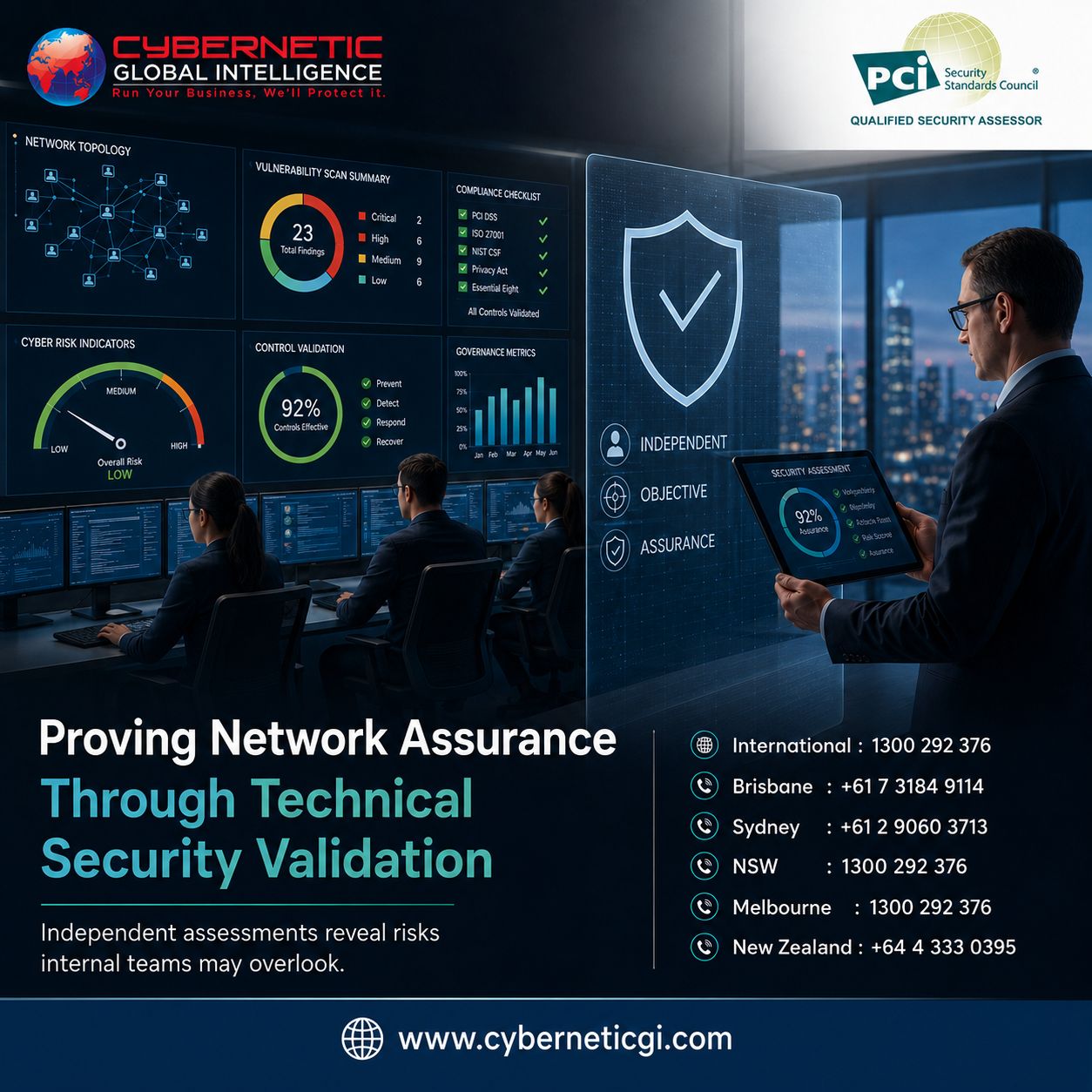
Risk committees often assume routers and firewalls are secure once deployed, patched, and logged in the risk register. But network devices are control points, not static assets, they drift from approved baselines through firmware age, legacy services, exposed management interfaces,...

Temporary vendor access becomes a governance risk when no one remains accountable for its continued use. Aviation organisations depend on maintenance providers, ground-handling companies, software suppliers and specialist engineers to support complex operational environments. These relationships require external access to...
Treating corporate defence as a discretionary cyber security expense rather than a core operational baseline creates an unacceptable structural liability for industrial supply chains. When corporate boards rely on unverified assumptions regarding their defensive capabilities, they expose their entire production...
Artificial intelligence is changing cybersecurity on both sides of the battlefield. While organisations use AI to improve detection and efficiency, threat actors are using the same technologies to automate reconnaissance, scale social engineering, and increase the speed of attack execution....
Financial institutions have long relied on a simple assumption: the more identity data collected, the greater the confidence in a customer’s authenticity. That assumption is becoming increasingly unreliable. Digital lending platforms, banks, credit unions, and FinTech providers now operate in...
Organisations frequently confuse threat visibility with operational resilience. Equipping a security operations centre with advanced tools to identify risks faster is essentially meaningless if the executive response framework is too slow to authorise action. This operational disconnect is coming into...

Cyber threats grow more complex every single day. New Zealand businesses face constant risks from global attackers. Hackers do not knock before they break in. To help businesses fight back, the National Cyber Security Centre (NCSC) released the Minimum Cyber...